As reported by Radarbali.com, the Kura Kura Bali (Turtle Island) Special Economic Zone (SEZ), managed by PT Bali Turtle Island Development (PT BTID), remains committed to optimizing the land it manages to ensure it remains productive, green, and has positive utility value.
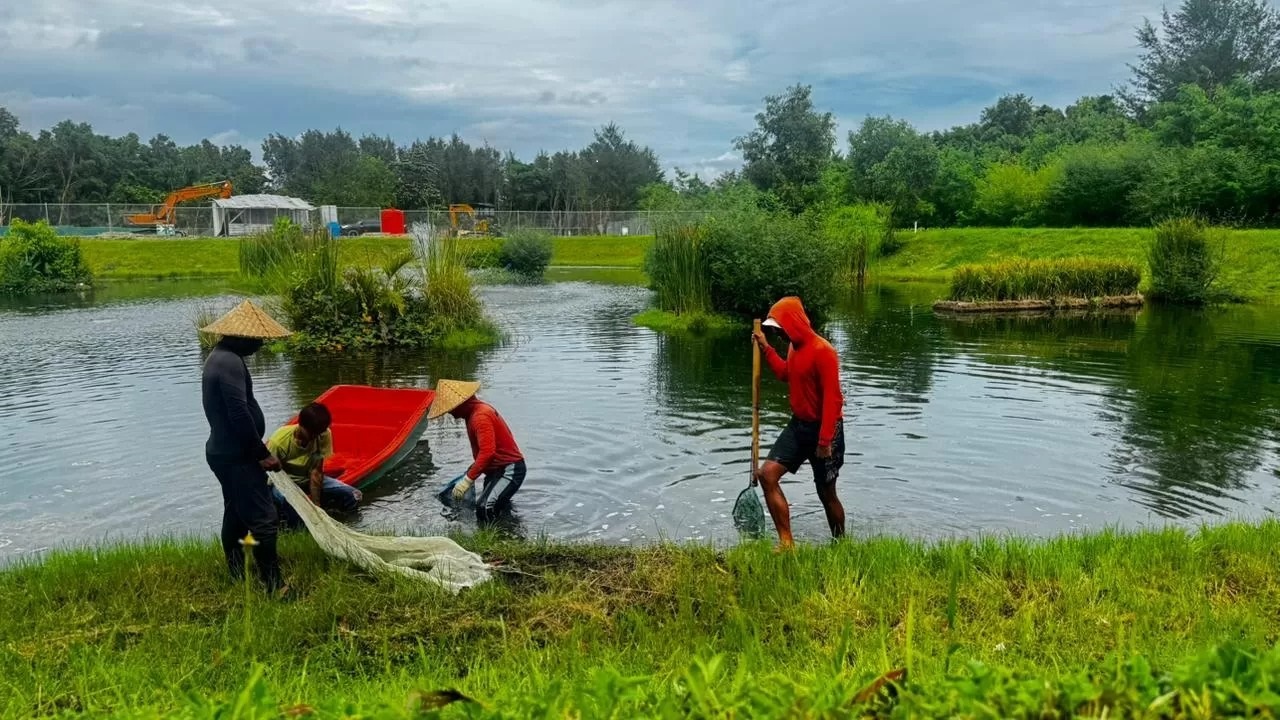
In collaboration with the Nukari Community in Serangan Village, PT BTID has led a Planting Program and a Floating Garden Project at Turtle Island. This initiative represents a creative, innovative approach to the productive use of land and a freshwater pond, in close collaboration with the local community.
The Kura Kura Bali/PT BTID (SEZ) is facilitating the project by providing the land and pond areas, while the Nukari Community of Serangan Village is acting as the technical partner, implementing the program. As a community already active in plastic recycling, art installations, and plant nurseries, Nukari’s presence ensures a creative touch that prioritizes cultural and traditional elements.
The planting and cultivate program has been enthusiastically welcomed by the Nukari local community for facilitating the creative and productive energies of Serangan Village.
I Wayan Darmaja, a representative of the Nukari community, explained that the subject land has been cultivated with several food crops, which have already begun to bear fruit following their initial planting just three months ago.
“We at Nukari were given a place to grow various crops, such as bananas, sweet potatoes, cassava, turmeric, vegetables, and even chilies. And we really enjoy the experience. Not only can we enjoy the crops when they are harvested, but we can also share the results with our friends and families at Nukari,” said Darmaja.
These plants grow and thrive alongside the estimated 700,000 plant species in the Kura Kura Bali Special Economic Zone (SEZ).
Care has been taken to nurture plant growth without the use of chemical fertilizers and pesticides. This is partially attributable to the cultivation of lemongrass, which functions as a natural pesticide.
Floating Garden
In addition to utilizing the solid land, the Kura Kura Bali Special Economic Zone (KEK) and Nukari have also introduced a “Floating Garden.”
Utilizing a 1,713-square-meter pond, this collaboration has transformed what was once a mere decorative element into a productive area that enriches the existing ecosystem in the open green space of the Kura Kura Bali Special Economic Zone.
With its low salinity and stable water movement, this pond is an ideal location for developing a pilot floating plant cultivation. These supportive environmental conditions allow the Nukari Community to explore various types of plants that adapt to aquatic environments.
Meanwhile, there are currently six planting beds serving as nurseries for this program. Assuming the new plantings prosper the initiative will be expanded to other locations.
The community-based planting program forms a ideal sustainable complement to the recent inauguration by PT BTID of a state-of-the-art Wastewater Treatment Plant complex at Kura Kura Bali in Serangan Island.
Supported by New BIOSYSTEM ARB Wastewater Treatment Facility
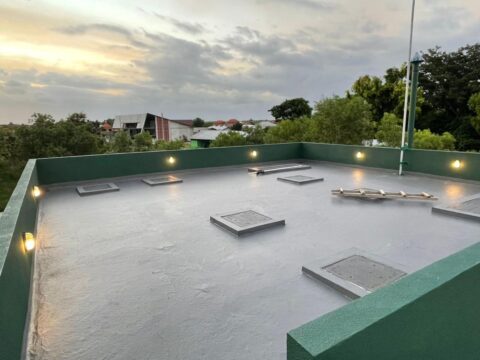
ARB (Air Recirculation Bioreactor)
The two-plant Wastewater treatment facility utilizes advanced ARB (Air Recirculation Bioreactor) technology, capable of treating and recycling 1,100 and 1,200 cubic meters of wastewater per day, respectively. The treated black and gray water supports the Nukari Community Planting Program and Floating Garden at Turtle Island as well as local landscape irrigation, aquaculture, and fish breeding. Organic byproducts of the process are converted into compost fertilizer, supporting a closed-loop, environmentally sustainable system.
Floating Pond Project
Speaking at the floating garden location, I Wayan Darmaja explained: “We first surveyed the system to see what plants could grow in this pond. After conducting the survey, we planted several plants, including wax grass and banana plants. We have also tried growing fruit and now have water apple plants in bloom.”
In addition to the various fruit and ornamental plants now prospering in the “floating pond” at Turtle Island, the collaboration has also precipitated a trial rice planting project at the same location.
Although still in the early stages of growth, the rice’s eventual successful adaptation to this floating medium could prove crucial, unlocking new economic opportunities for the surrounding community.
Darmaja also explained that these programs have been designed to foster local leadership operated by “local champions” from Serangan Village. He hopes this collaborative model can inspire even more positive initiatives in the future.
“I have personally felt the benefits. Here, we are guided and greatly assisted in developing ‘local champions’ for this innovative program. The relationship between the community and Kura Kura Bali is strong, and we feel very much cared for. I hope this program continues to thrive and can inspire more local champions to join and positively collaborate.”
Similarly, Zefri Alfaruqy, Head of the Communications Department at PT Bali Turtle Island Development (BTID), explained that collaboration with the surrounding community is a crucial part of the sustainable development of the Kura Kura Bali Special Economic Zone (KEK).
“This collaboration reflects the genuine spirit of mutual growth and benefit between the Kura Kura Bali Special Economic Zone (KEK Kura) and the surrounding community,” he commented.
Zefri added that this pervasive commitment is being implemented through various initiatives such as the Planting Program and the Floating Garden.
PT BTID’s focus, he said, is not solely on land utilization and productivity, but also on empowering the community at large, including creating local employment opportunities, so that economic benefits can be directly felt by the residents of Serangan Village and the surrounding area.
Zefri continued that, through its innovative development program, the Kura-Kura Bali Special Economic Zone (SEZ) continues to seek creative solutions and opportunities to address environmental challenges through reforestation and increased land and pond productivity. Adding: “This synergy is expected to create a sustainable ecosystem where nature, technology, and the local community can continue to coexist harmoniously.”
Related Links
Biosystem Launches Wastewater Treatment Plant at Kura Kura Bali
PT BTID Clarifies Status of 62,14 Hectares of Mangrove Land
Major Yacht Harbor For Serangan Island in Sanur, Bali
ACS Bali School Opens, Offering Holistic Education from Serangan Island
Stay Informed on Bali Tourism-Related News: Subscribe to Bali Update