


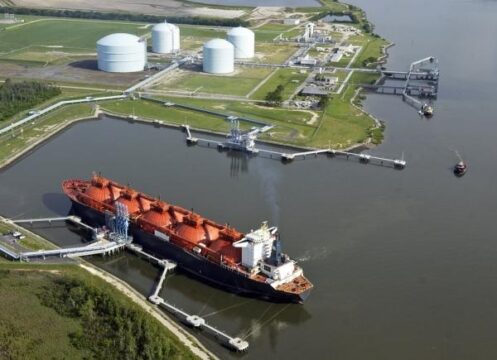
RadarBali.com reports that, despite widespread environmental, religious, and security concerns, construction of a Liquefied Natural Gas (LNG) Terminal near Serangan Island in South Denpasar, Bali, is proceeding.
Indonesia’s Environment Minister and Head of the Environmental Control Agency (BPLH), Hanif Faisol Nurofiq, has given his official blessing and a green light to the controversial project by issuing Environmental Feasibility Decree (SKKL) Number 2832 of 2025.
The SKKL constitutes the legally mandated environmental impact study and feasibility assessment for the construction and operation of the Bali Provincial LNG Terminal, with a planned capacity of 170 million standard cubic feet per day (MMSCFD).
Managed by PT Dewata Energi Bersih, the LNG Depot is located in Sidakarya Village, Sanur Kauh Village, Serangan Village, Sesetan Village, and Pedungan Village, South Denpasar District.

An Intrinsic Contradiction?
Environmental activist and field organizer of 350 Indonesia, Suriadi Darmoko, objects to the LNG Depot, stating the facility will contradict the wellness tourism brand currently under development for the Sanur Area of Bali.
Meanwhile, local community members in Serangan have expressed fears of potential gas leaks and explosions, which they see as an environmental threat to the densely populated, popular tourist area. Those promoting the project claim that the LNG Depot is essential to Indonesia’s goal of generating clean energy and achieving national energy independence.
Suriadi Darmoko, viewing the now internationally recognized security risk of storing and handling large quantities of LNG near population centers and vital transportation infrastructure such as Bali’s Ngurah Rai Airport, “Moko” told Radar Bali on Sunday, 08 February 2026: “If a tourist area is close to a disaster risk, the quality of tourism will definitely decline. Foreign tourists are very sensitive to security risks. They want to see open beaches, not large tankers.”
Continuing, Moko said that natural gas remains a fossil fuel that emits and exacerbates climate change. The potential for methane leaks can also amplify greenhouse gas (GHG) emissions.
Moko also questioned the government’s actions, which he considered inconsistent with Gubernatorial Regulation 45 of 2019 concerning Bali Clean Energy. Adding: “The claim that gas is a clean energy source is a myth. The Intergovernmental Panel on Climate Change (IPCC) findings show that gas remains a fossil fuel and is not recommended for new development.”
In fact, fossil fuel power plants should be retired in the future,” said Moko, who is the former Director of Walhi Bali.
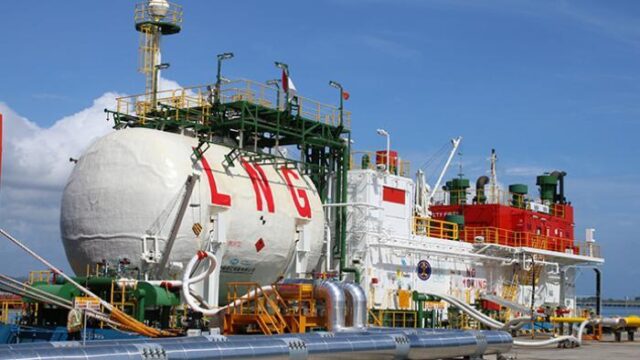
Environmentalists cite the presence of the LNG Floating Storage Regasification Unit (FSRU) as potentially significantly impacting local fishermen, who will have difficulty going to sea because the area is occupied by LNG infrastructure.
Meanwhile, in response, the Minister of the Environment, Hanif Faisol Nurofiq, confirmed the issuance of the SKKL “for the sake of Bali’s energy security.” In further support of the Government’s position, Nurofiq cited a recent power blackout, insisting that Bali must not experience future electricity supply shortages.
”Bali needs fresh air, and the fastest solution right now is LNG,” Hanif said on the sidelines of a trash cleanup at Kedonganan Beach, Badung, on Friday, 06 February 2026. Hanif explained that LNG is a cleaner fuel for power generation than coal because it produces lower levels of pollutants and particulate matter.
”This doesn’t mean low carbon, but low emissions. This is a precise transitional step because Bali is a place where many people gather,” he added.
Regarding residential protests, Hanif claimed that outreach had been conducted for three years. In fact, the FSRU, originally planned to be 500 meters from the shoreline, has been moved to 3.5 kilometers away following studies and discussions with local residents.
Echoing the Minister of the Environment’s comment, Bali Governor Wayan Koster ominously warned that a power failure similar to the one that caused the Bali Blackout could trigger widespread unrest in the future. If the electricity goes out, there will be chaos again,” he said.
Koster explained that construction of the gas-fired power plant would begin in 2026 after being approved by the Minister of Energy and Mineral Resources, Bahlil Lahadalia, and PT PLN.
Koster believes the new LNG terminal is key to Bali’s energy independence, eliminating its reliance on supplies from Paiton, East Java. However, in a separate interview, Moko countered these claims of independence, noting that the gas source is not actually coming from Bali. “The gas is taken from outside Bali, and the technology is also from outside. Where is the independence?” he quipped.
Meanwhile, the Head of Serangan Traditional Village, I Nyoman Gede Pariartha, emphasized that residents are not opposing investment, but are demanding transparency and involvement from the very start of planning.
”The ocean is our livelihood. We just want the community to be involved and not be surprised by the impacts,” he said when submitting his complaint directly to the Special Committee (Pansus) for Spatial Planning, Assets, and Licensing (Trap) during a recent meeting with PT BTID (Bali Turtle Island Development Corporation).
As previously reported on Balidiscovery.com, there are long-standing cultural, environmental, and security (anti-terrorism) concerns surrounding the LNG Depot.
Cultural Impact
The proposed depot will be erected near a sacred Balinese temple, Pura Sakenan, an important religious site built in the 11th Century. Bali traditionally prohibits commercial and industrial developments in close proximity to religious temples.
Environmental Impact
Concerns about the environment of Serangan Island and the potential negative impact of the LNG Depot remain high. The presence of a large ship measuring 300 meters long and 4 decks high will impede traditional fishermen’s activities and could someday run aground. The construction of the LNG Sidakarya Depot could cause environmental damage to the surrounding mangroves and coral reefs. Especially if, during the construction period, the area is dredged, the sea and its contents will be disturbed, damaged, and destroyed,” Paramartha said.
Local community leaders have expressed concern that Serangan Island is a turtle habitat, where turtles habitually return to lay eggs in the same location.
Sustainable Tourism
A respected academic in the field of tourism questions the depot’s role in developing Bali as a high-quality tourism destination that is cognizant of its inherent carrying capacity and respectful of Bali’s all-embracing Tri Hita Karana philosophy.
Tri Hita Kirana is a Balinese philosophical belief that, in all undertakings, balance must be maintained among three areas of existence: between man and God, between man and nature, and among members of human society.
A Very Genuine Security Consideration
Foreign governments. Public security and transportation experts are becoming concerned about the threat to public safety posed by methane leaks and spills from LNG facilities, and the even graver danger to Bali in the event of a terrorist attack on an LNG depot, such as the facility planned on Serangan Island.

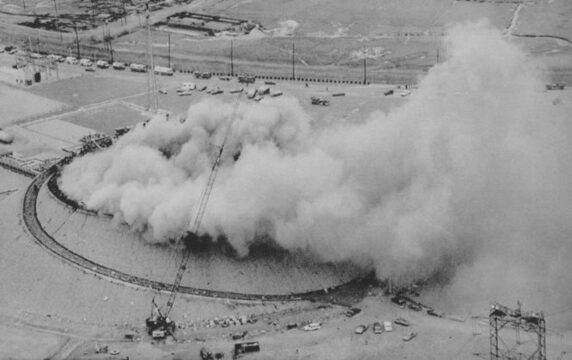
Simple leaks from pipelines carrying LNG could cause severe burns within a radius of ⅓ to 1-¼ miles after exposure for only 30 seconds. This calculation is now used internationally to forbid LNG Import Terminals near resort areas, airports, and population centers.
With Bali’s Ngurah Rai International Airport traffic pattern, Benoa Cruise Harbor, the Nusa Dua Complex, and Bali’s capital of Denpasar – all closely surrounding the new LNG Depot – the wisdom of locating the facility smack dab in the epicenter of Bali’s tourism, residential, and commercial centers is questioned.
The very real threat of a cascading failure if any of the up to three LNG tanks on a five-tank ship start to leak and catch fire has led security experts to generally agree on the possible severity of the heat hazard from a small to medium-sized LNG Spill.
The proposed LNG Depot near Bali’s Serangan Island on the approach and departure paths of Bali’s Ngurah Rai International Airport also heightens the risk of a terrorist attack. Serangan Island is only 4 kilometers from the landing threshold of Bali’s main runway number 027. Serangan Island is also only one kilometer away from a large Pertamina Fuel Depot.
All this on the southern part of an Island that has twice been the target of international terrorist attacks.
Whether by accident or terrorist suicidal design, a direct hit of an aircraft on an LNG tanker could cause a cataclysmic explosion, putting thousands of lives at mortal risk in South Denpasar, Sanur, Kuta, Jimbaran, and Nusa Dua. Such an attack could cause an immense loss of life, incalculable damage to Bali’s tourism economy, infrastructure, and effectively close the Island’s main seaport and airport for an indefinite period.
Because LNG depots are considered “hot” terrorist targets, these facilities are now widely labeled unsuitable for placement in densely populated areas or near key infrastructure components.
From 1970 to 2018, there were 640 instances in which terrorists targeted oil and petroleum tankers, gas facilities, and ports. The number of such terrorist attacks has recently increased dramatically, with 78% of the 640 terror attacks on gas and fuel centers occurring since 2008.
Such depots are now also being targeted by drone attacks – an increasingly popular modus operandi for missile and bomb attacks.
Related Links
South. Denpasar LNG Depot to Be Built 3.5 Km from Shore
LNG Depots on Serangan Island: Threat to Bali’s Natural Heritage?
Luhut Wants Bali LNG Depot Built Offshore
Bali LNG Depot: Greens Told to MYOB!
Koster Supports LNG Terminal in South Bali
WALHI: LNG Documents are Public Information
WHALI Seeks Access to LNG Public Records
Editorial: LNG Terminal in South Bali
Stay Informed on Bali Tourism-Related News: Subscribe to Bali Update